


A few years ago, I was sitting at a table with my wife in Core by Clare Smyth, coming to the end of a stupendous dinner. We had arrived with high expectations, given Smyth’s culinary pedigree. They had all been exceeded. The restaurant had only been open a few weeks. It had no stars. But I remember telling a friend a few days later that it was something truly special. We returned with a larger group for lunch a couple of months later, and it was truly among the most outstanding experiences of my life.
Similarly, the first time that I went to Trivet, I was with a couple of friends, and we were on our way home from another lunch. We thought we might have one more glass of wine. Trivet’s bar seemed ideal. It had only been open about three weeks. No stars — yet. We wound up ordering a few snacks. A happy accident. But the first time I tried Jonny Lake’s ‘hot tongue bun',’ I had that same feeling. Special. Truly special.
I had that feeling again last week, sitting at the Chef’s Counter in The Cocochine, watching Chef Larry Jayasekara and his team hard at work.
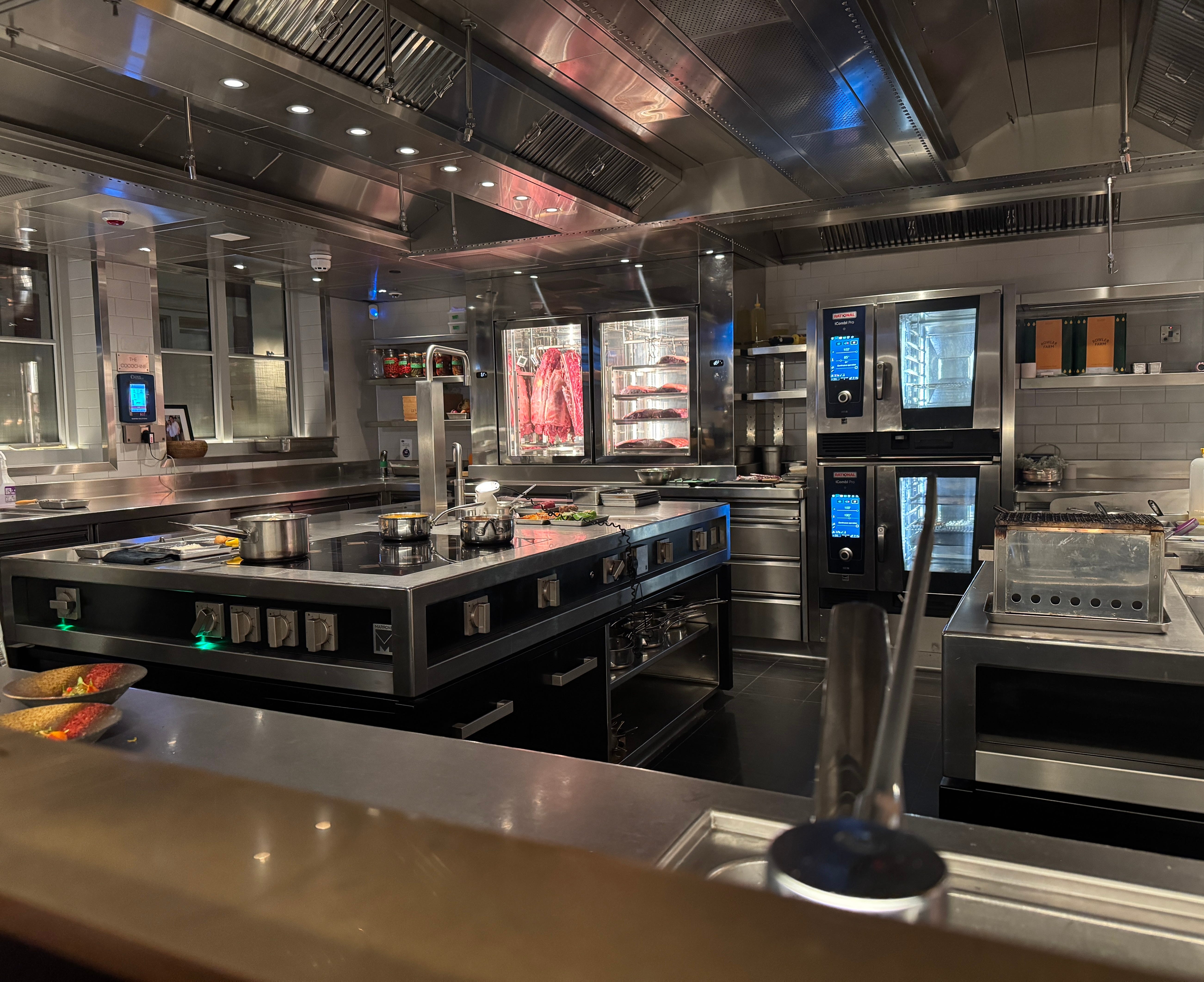
These moments are hard to describe. It’s eating food that you feel as much as taste. It’s a connection between the dish and something deeper in yourself. Sometimes, it’s a force that reaches into the recesses of a memory otherwise lost to time. But it can also be the discovery of a flavour that you have never experienced before, and that you want to feel again.
For me, it tends start with a particular dish, and then builds through a meal.
At The Cocochine, the feeling started with the third course: “Ceylon King Crab Salad.” But really, it was the consommé which accompanied the salad.
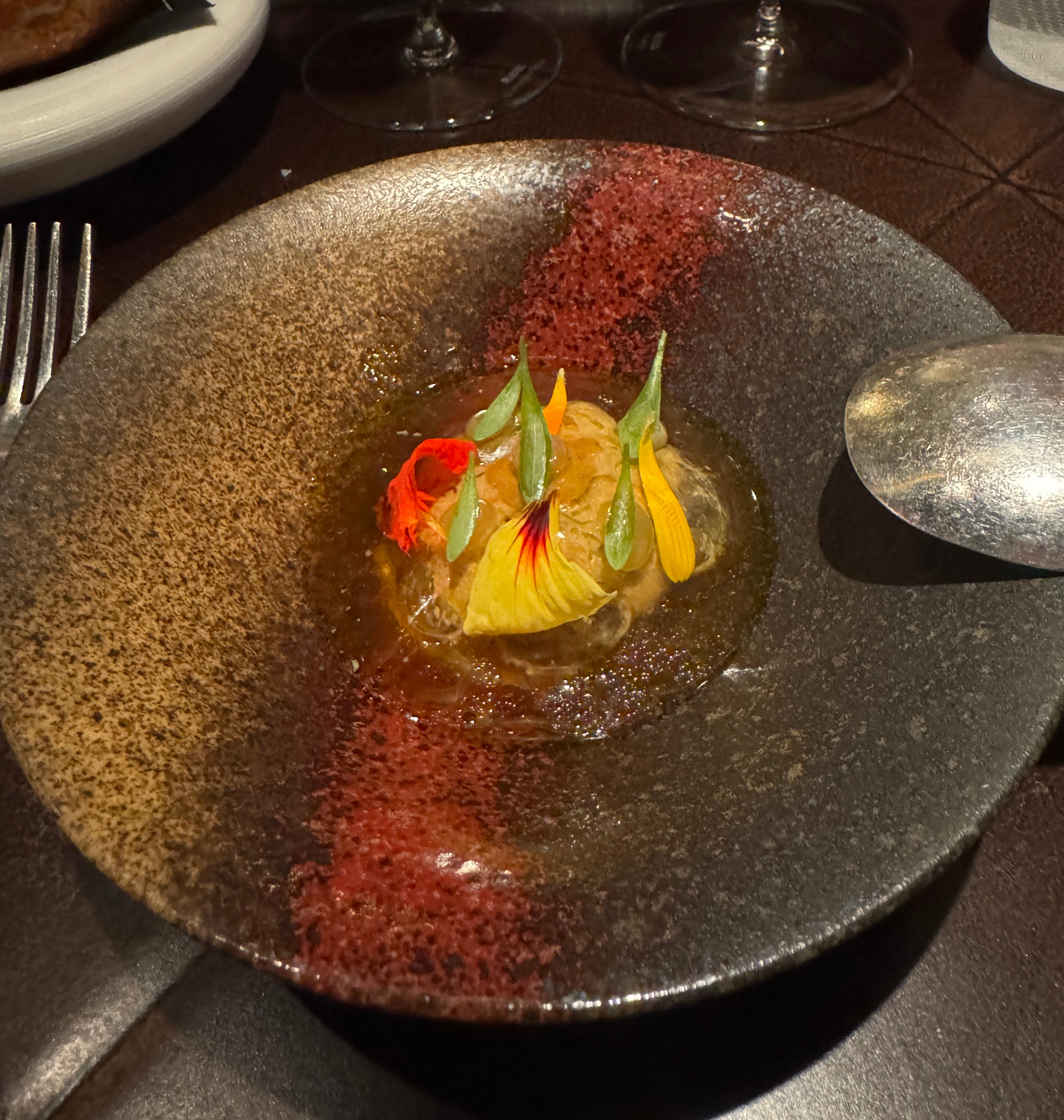
Making great consommé is damned near impossible. The thing is, it has to be clear. Perfectly and totally clear. And that’s really hard. It requires tremendous patience and technical skill. To make it from crab curry is even more difficult. Essentially unattainable. But that’s exactly where the consommé at The Cocochine starts. Then, to have it bursting with flavour, feeling just like something you ate on a beach in Galle a couple of years ago, is that much more miraculous. To take the trouble to travel to the Sri Lankan market in Wembley to source Sri Lankan blue crab. To perfect the balance of spice so that the crab salad and the consommé deliver the flavour of Sri Lankan crab curry, but in a tightly packed, refined form that isn’t too much or too little… Well, it almost defies words. Those little things reflect an obsession that adds up to greatness.
I only went to the Cocochine because Andy Hayler told me to. I had considered it in the past, but it sounded like just another predictable Mayfair place. Excellent food, I was sure, but expensive and probably not quite worth it. Indeed, it was telling to me that none of the critics that I follow have reviewed it. I was also struck that Michelin hadn’t awarded a star in February, in spite of expectations that it might.
Andy added two bits of vital context: First, Chef Jayasekara’s vision has evolved considerably since the restaurant first opened, and he is now bringing in a lot more influences from his native Sri Lanka. Paired with his experiences as head chef of Petrus, working with Marcus Wareing, and in other top kitchens, his food is now delivering on his tremendous potential.
Second, ingredients. Through one of his investors, Chef Jayasekara has exclusive access to the Rowler Farm in Northamptonshire as well as the fisheries off Tanera Island in northern Scotland. As a result, he has the unique opportunity to use ingredients with unheard of levels of quality.
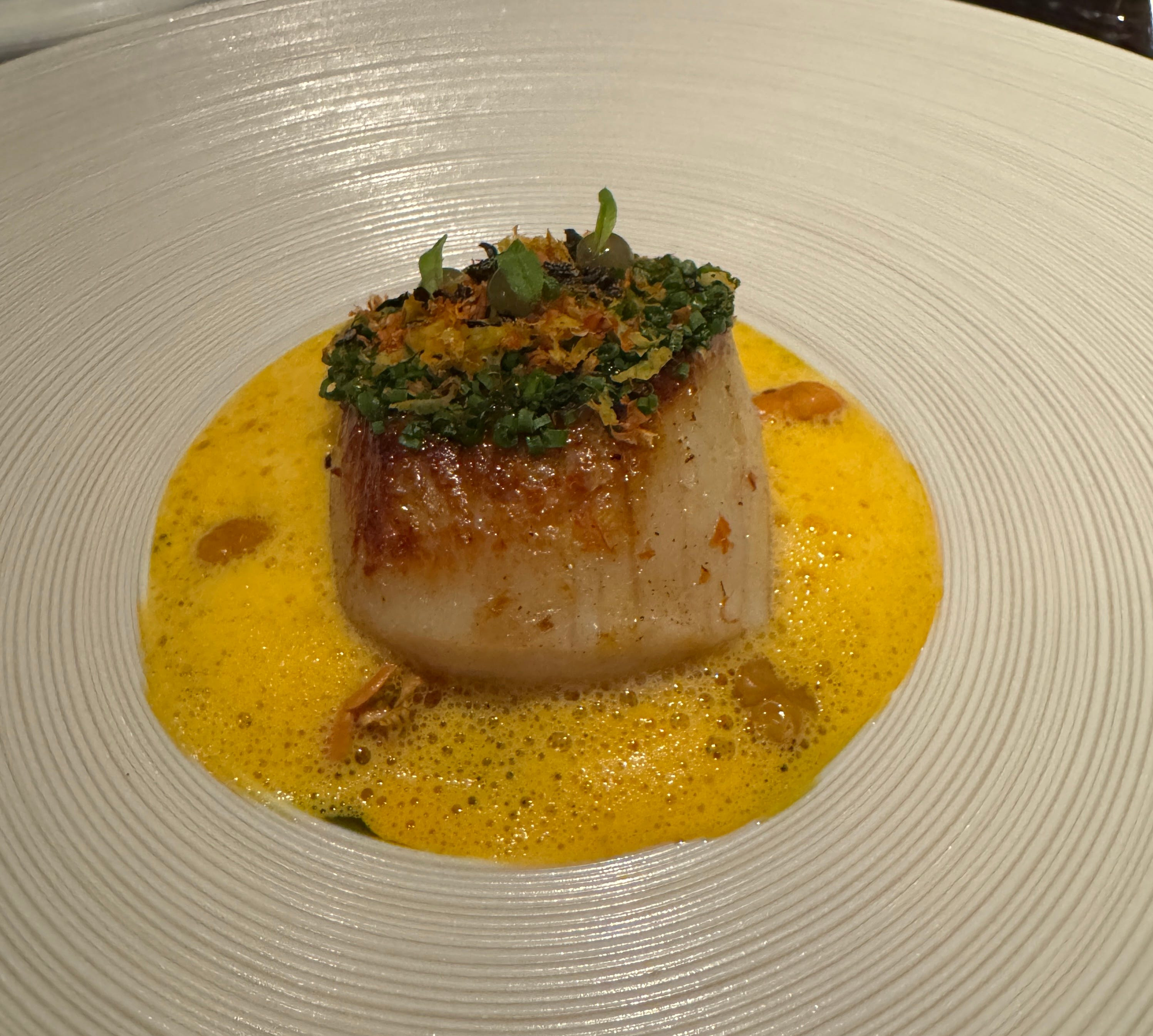
Take the scallops. Tanera’s scallop beds are particularly rich and well managed. As a result, Chef Jayasekara could serve me the largest and most delicious scallop that I’ve ever encountered. The size of my fist, they are caramelised only on one side, cooked to perfect medium rare, and served over braised kombu. There are delightful little pickled girolles and crispy Alsace bacon. Then a bacon sabayon is added over the top. A scallop cream is made from the skirts, coconut cream, and spices. The whole dish erupted with flavour. The freshest scallop you can imagine. The spices. The pickled mushrooms. It was a take on scallops and bacon, of course. But with those Sri Lankan influences, it became something entirely new.
Then there was the deer. Sika Deer is raised at Rowler Farm, aged there for a week, then brought to London where it is aged for a further week in the restaurant. Garnishes are made from elderberries and sloe berries that the chefs pick themselves on weekly visits to the farm. Sauce made from bitter chocolate balances the sweetness from the berries. But the dish is revelatory because Chef Jayasekara wins the sambal gamble.
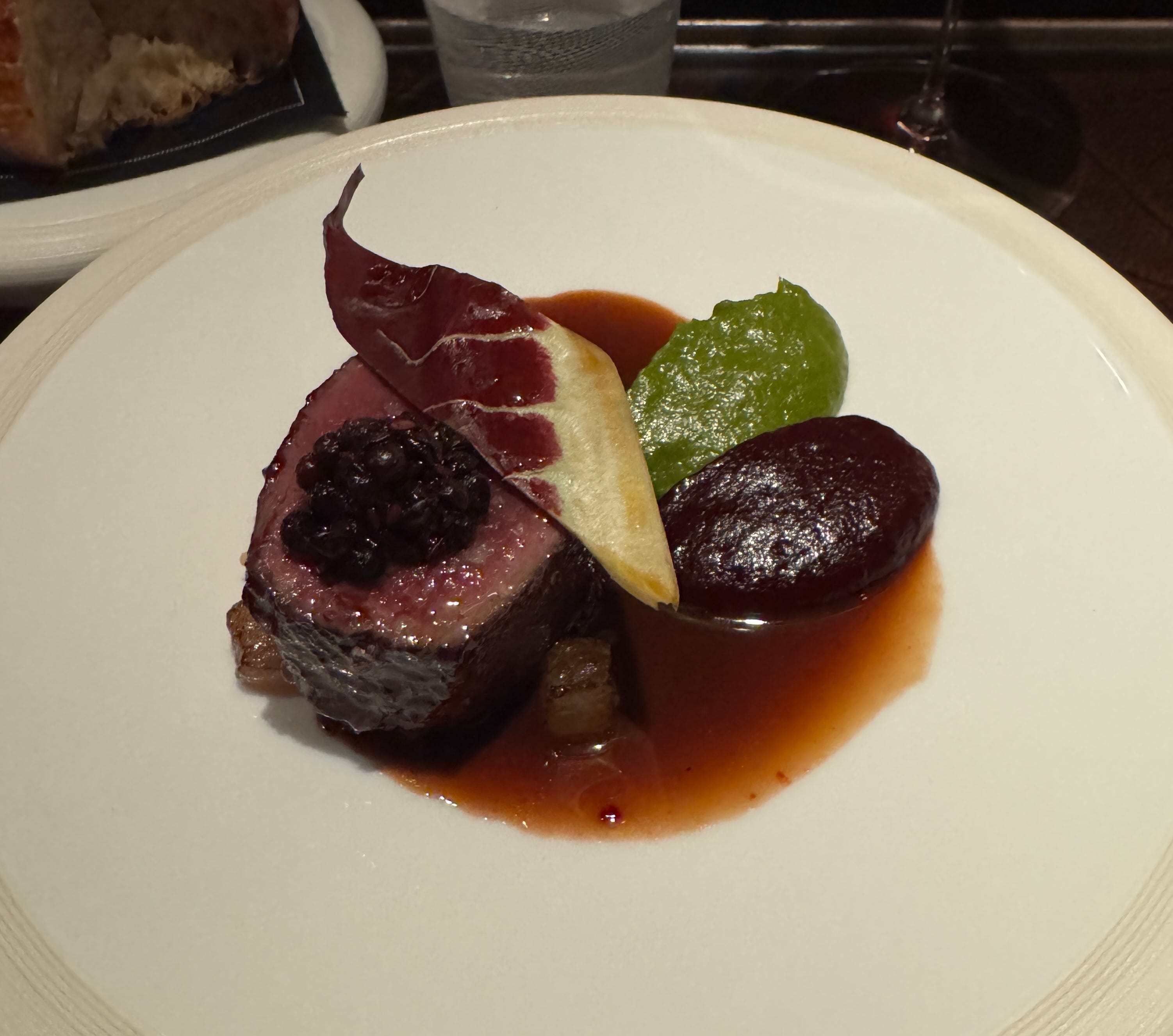
Sambal is a staple of Sri Lankan cooking. Basically a chilli sauce, authentic versions can be painfully hot. But that would overwhelm the subtle flavours of the deer and the berries. So Sambal at The Cocochine is more restrained. Still packing a punch, but perfectly calibrated to match the deer and the other accompaniments.
The rest of the savoury courses included an Otoro hand roll, made from tuna imported directly from Tokyo, seasoned with astonishing aged soy sauce. Kombu was quickly seared in front of me to soften it, then the tuna, sauce, and a bit of caviar were added.
There were also langoustines, again, impossibly huge, brought down from Tanera. They were served with artichoke pureé and perfectly al dente lentils. A bisque carried notes of Sri Lankan spices and brought the whole dish together.
And lobster. Grilled in a Sri Lankan banana leaf to preserve the texture and served with a tamarind and tomato sauce. Another revelation.
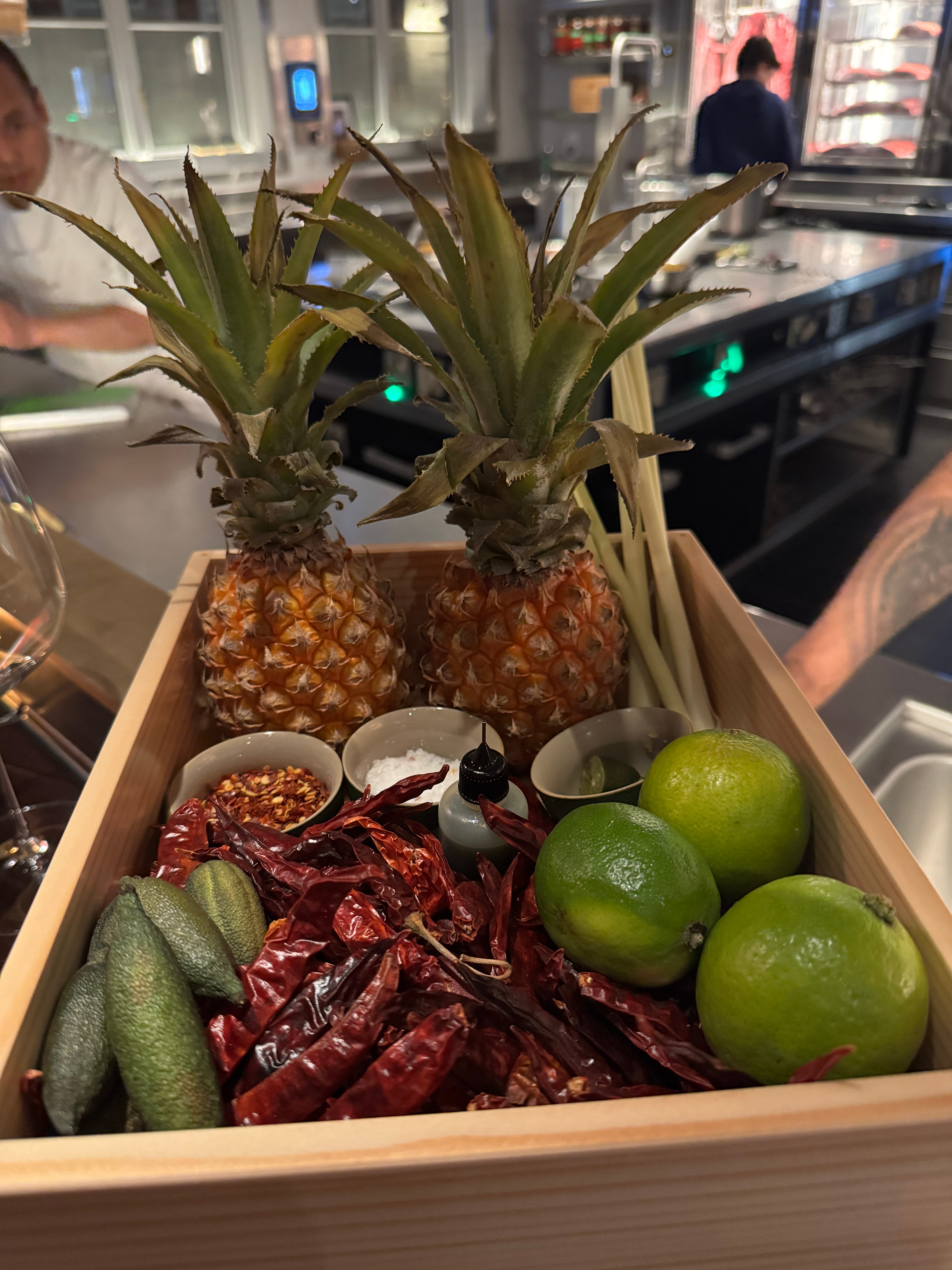
One of the desserts was street food. Literally. The team takes Sri Lankan pineapple fresh from the Wembley market and makes the kind of thing you would buy from a roadside vendor on a busy road anywhere on the island. The street-sellers will ask if you want sweet or chilli. At The Cocochine, you get a bit of both, balanced perfectly. You would definitely enjoy it on a hot day watching cricket from the ramparts of Galle Fort. I can’t remember the last time a palate cleanser made me smile and chuckle at a dormant memory. This one did.
Hayler’s analysis of the wine list concludes that it is exceptionally well-priced, and I benefitted from that generosity in the pairings developed by the restaurant’s Sommelier team. The highlight was a 2009 Chateauneuf-du-Pape from Rotem & Mounir Saouma, paired with the deer, it was singularly delightful.
As I was finishing, one of the restaurant managers told me that, on average, a diner who visits The Cocochine returns three more times after their first experience. That’s easy to understand.
But the reality is that the restaurant is flying slightly below the radar. There hasn’t been much buzz about it. And reading Hayler’s reviews, it’s clear that The Cocochine has evolved since it opened. In the early days, it seems that Chef Jayasekara was focusing more on refined French with elevated ingredients. But in recent months, he has pushed towards something new, better, and more authentically his own.
The food still bears the hallmarks of the techniques he learned in his storied career. But he has gone beyond what he was taught and is now inventing rather than iterating.
I have no doubt that Michelin will reward his efforts in the next guide. In my estimation, the quality of the cooking, ingredients, wine, and space merit two stars. We’ll see.
In the meantime, you should go. Right now.
Because a restaurant this good will not remain below the radar for long.
It’s special. It really is.
Quick hit: A truly special place offering inventive classical cuisine with strong Sri Lankan notes.
Details: Booking essential. Mayfair. ££££.
Restaurant website. More on Instagram and from Michelin.
Find it on Google Maps. 27 Bruton Pl, W1J 6NQ.
Thanks for reading this week’s review. Where have you had special dining moments? Tell me in the Comments. And please subscribe if you haven’t already.